
Why metaphors are bad for learning
The first problem is that people approach Large Language Models with general metaphors like - they are very fancy autocomplete or they are statistical predictions of what text is likely to look plausible. Etc. But this adds very little to people’s understanding. These metaphors really just wave away any attempt at understanding or, worse, actively mislead their audience.
Exemplars instead of metaphors
Instead of trying to explain what models are, have people use ChatGPT or Claude for a while and then say: Large Language Model is the thing that powers this.
But if you want to see all it can do, try these:
ask the model to write a poem about a factual subject
ask it to link each fact in the poem to a related Wikipedia entry
ask it to put all of those facts into a table with links
write a plan for learning one of those facts a day for the next week
paste in a screenshot of your calendar and ask it to suggest the best times for those practice sessions
ask it to create a calendar file you can import into your calendar with events for each of the days you agreed on that will contain a quick learning plan and a link to the Wikipedia page
ask it to create a learning tracker so you can check your progress as you go
write or dictate a summary of what you learned every day and ask it for feedback
to round it off, try having a voice conversation or ask it to generate an image (these are not exactly the same models as the ones you’re using in text chat but they are based on the same principles)
Literal simplification
These examples should give anybody a good sense of what a Large Language Model can do but not much of an idea of what it is. We can go back into metaphors but we would be better served by being literal, if very simplistic.
On a very literal level, a Large Language Model is just a giant CSV file with billions to trillions of numbers in it. Those numbers are vectors - meaning they correspond to a direction in space.
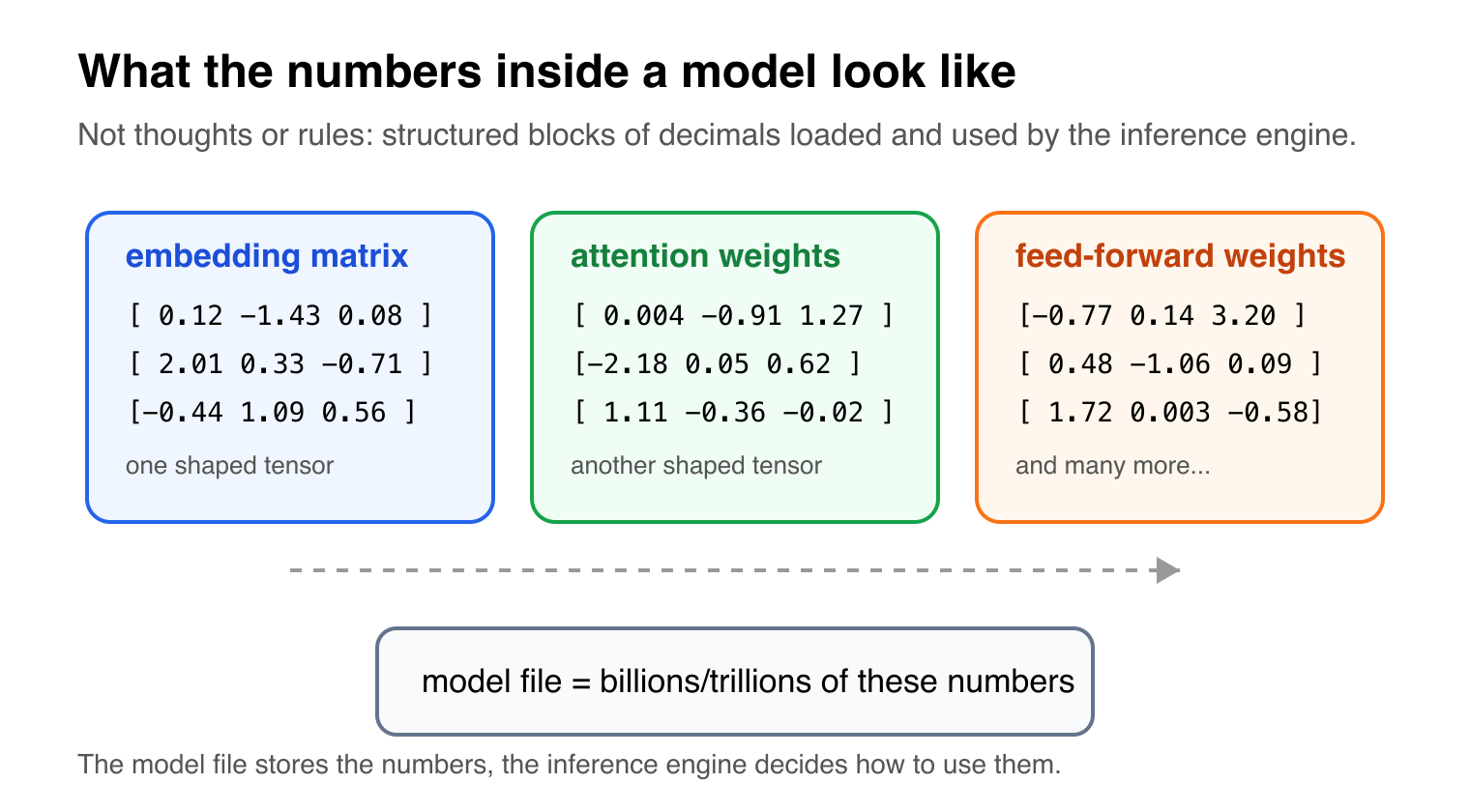
This means that they (very roughly) put words and concepts into a space where those that we think of as being “close to each other” are actually close to each other in space.
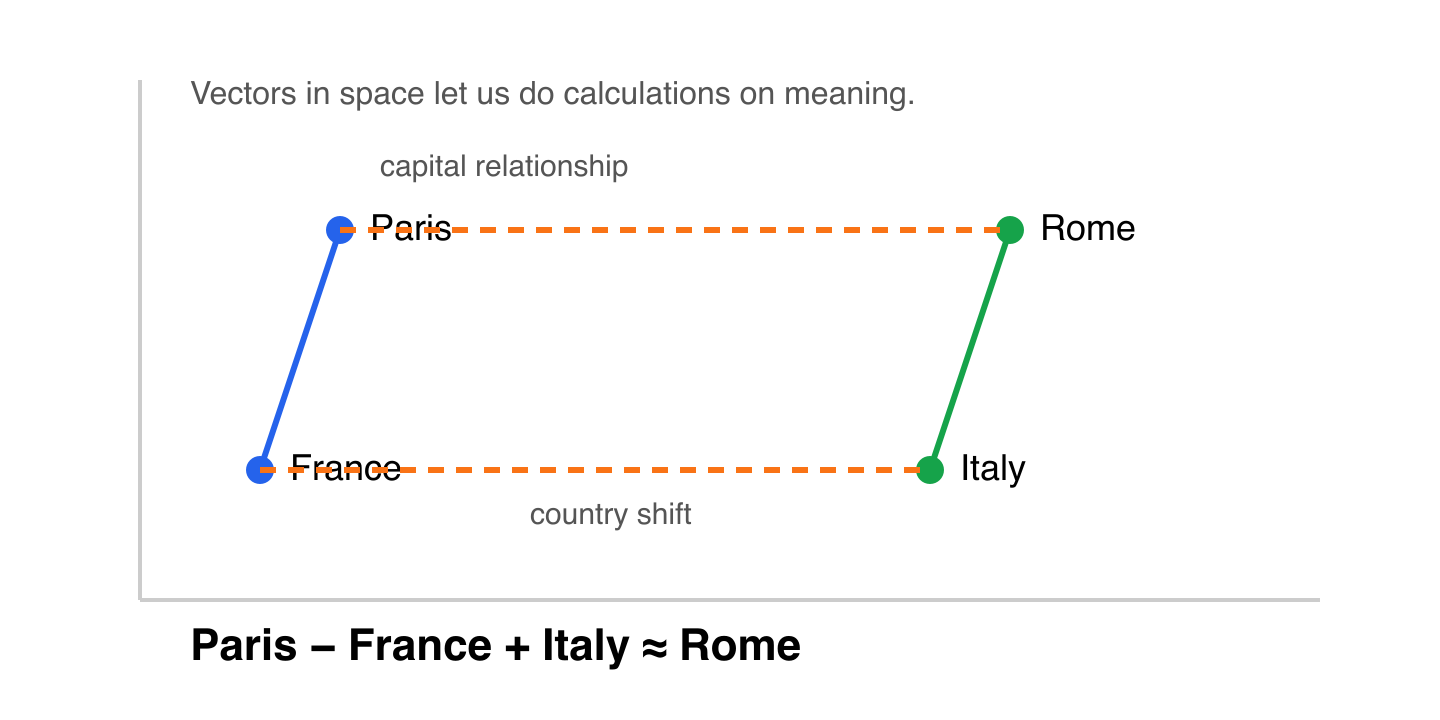
There are NO FREQUENCIES inside the language models! Just vectors. They are more geometry than they are statistics.
This (plus a lot of other “technical” stuff) gives us the behavior we know from using ChatGPT.
When a Large Language Model is generating an answer, it is literally doing normal algebra on vectors to (1) determine which part of the “meaning” space we’re operating in and (2) which parts of the text are most important to determine what matters.
Magically powerful and disappointingly mundane
What Large Language Models can do can feel like magic or science fiction. And that is not a bad way to approach their capabilities. But at the same time they are also incredibly mathematically simple under the hood — so much so that learning all about how they work can be a bit of a let down. The model itself ends up being equivalent to a brain but as a physical object, it is just a giant spreadsheet sitting on a computer somewhere waiting to be used. And by giant, I mean, a lot of numbers inside it. In terms of size, it is probably no more than a few terabytes - meaning it would fit on a cheap portable hard drive.
Some common misconceptions
Because the experience of using Large Language Models is much more similar to interacting with humans than using computers, it is easy to make assumptions about how they work based on how we know humans work. But at the same time, they are “computer stuff”, so many people assume they can do anything a computer can do. None of this is helped by the way AI is talked about by the media and many “metaphor-first” educators.
I talk to people all the time and these are the most common misconceptions I encounter.
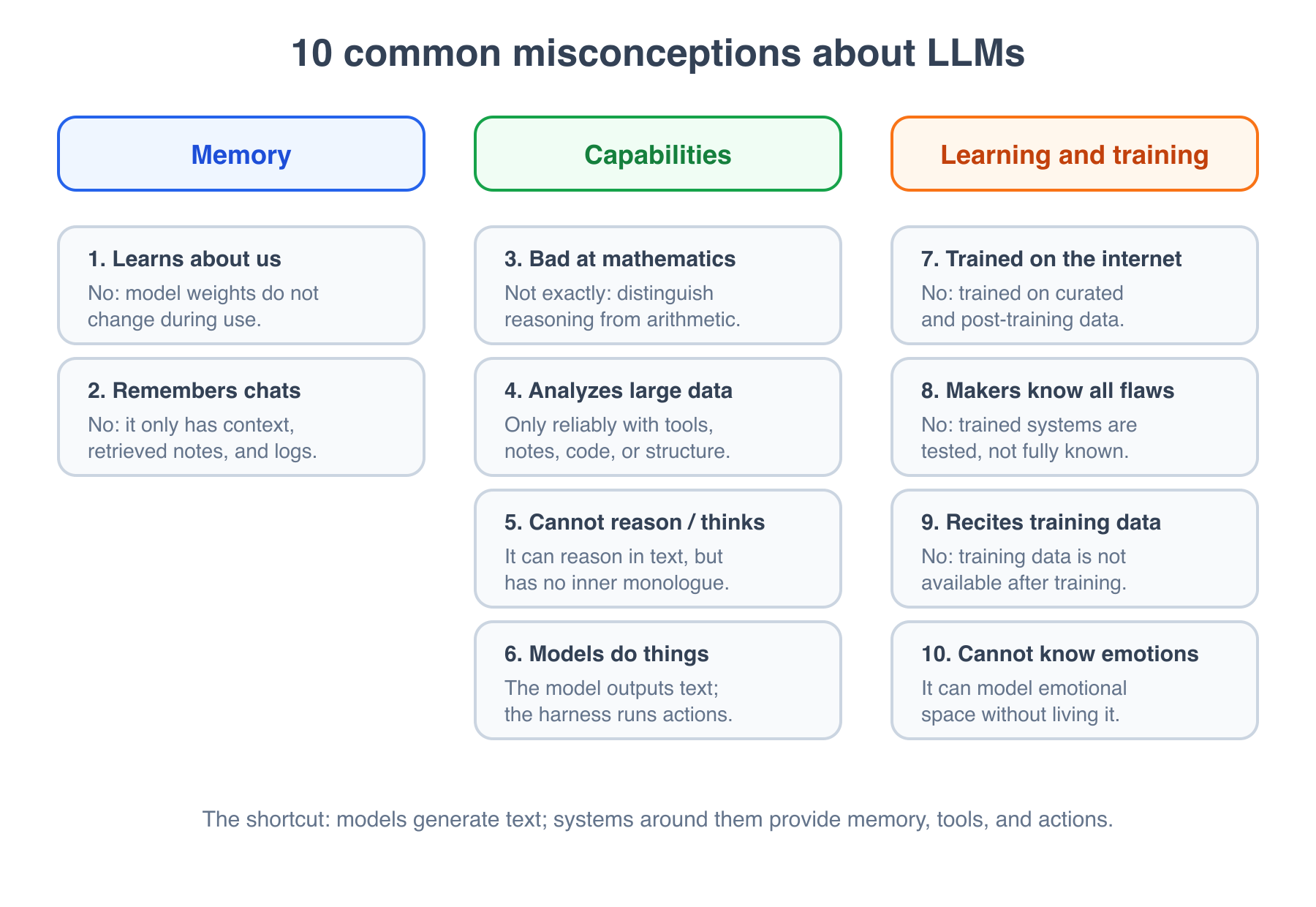
A. Misconceptions about model memory
1. The models learn about us as we use them
NO. They are ‘trained’ once and never change until a new model is ‘trained’. The model powering ChatGPT or Claude never learns anything about you. This is very different from a YouTube recommendation algorithm.
2. The models remember past conversations
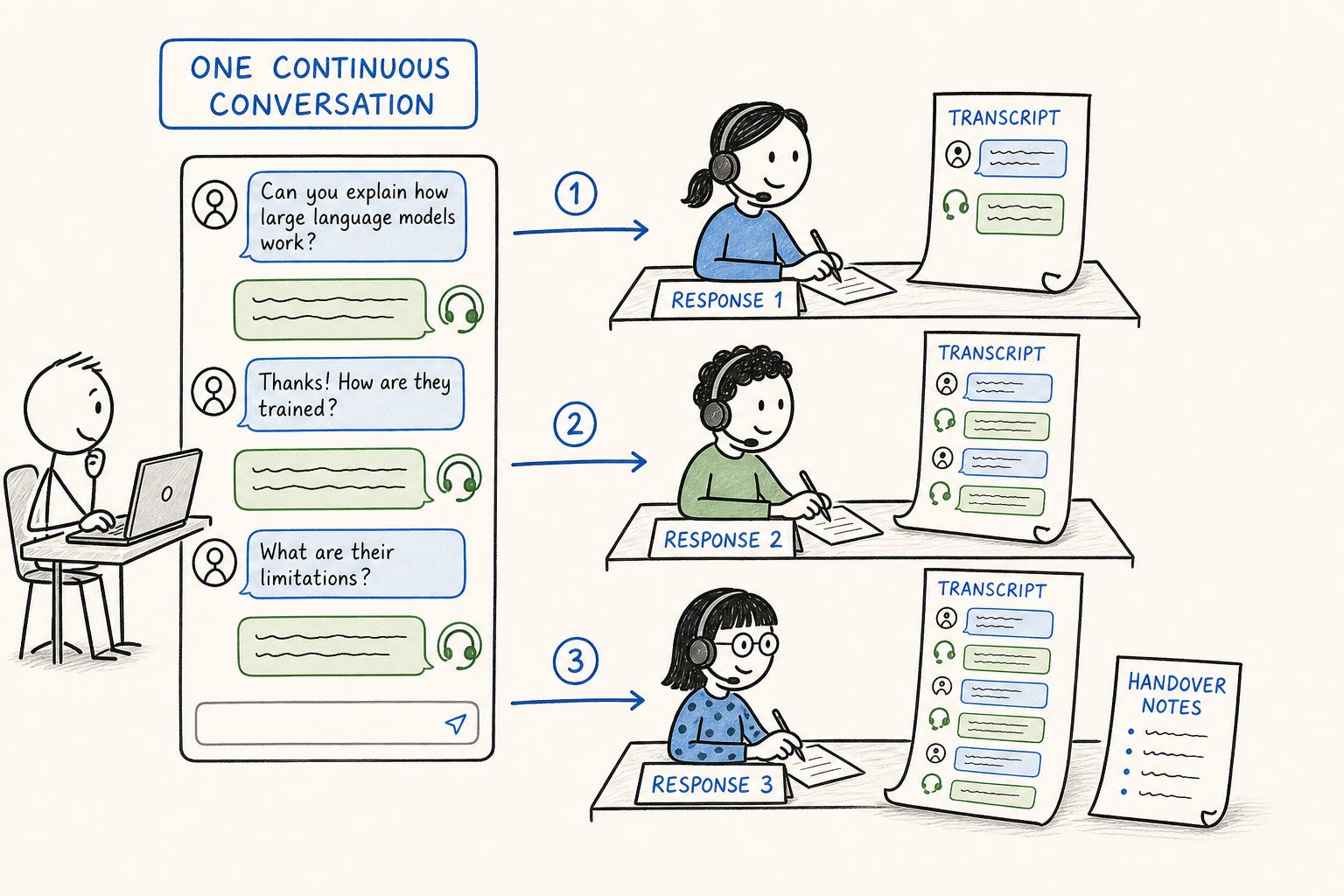
NO. This is the biggest misconception people have based on normal use of ChatGPT. The models have no memory (just like they don’t learn). They can only ever generate text based on what (1) they learned through the training process and (2) what is in their ‘context window’ at the moment of generation. Meaning anything they ‘learn’ is just ‘notes’ they left and retrieved. The maximum amount of these ‘notes’ the models can keep “in mind” (called a “context window”) is about 100k-500k words.
B. Misconceptions about capabilities
3. The models are bad at mathematics
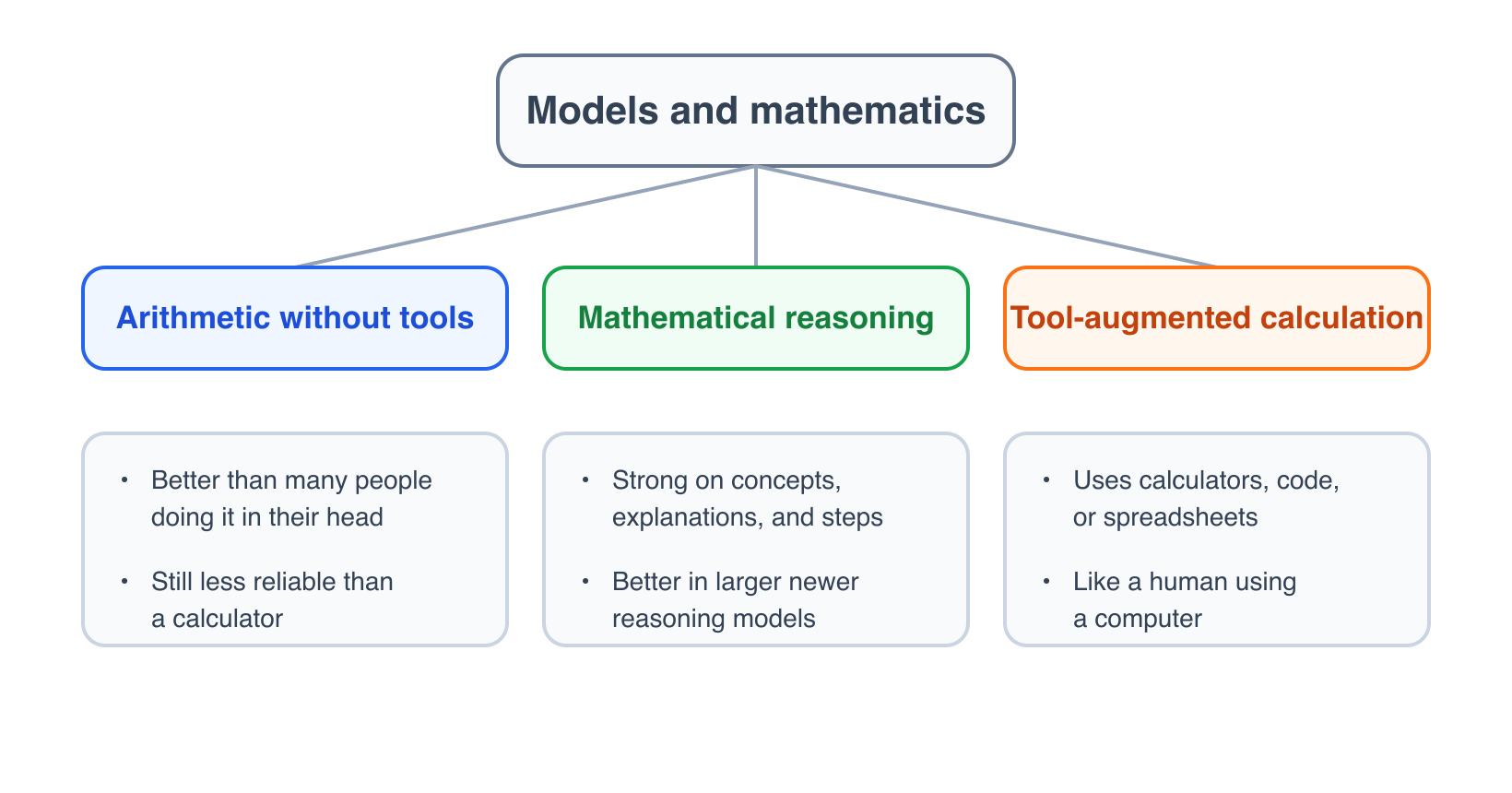
NO. The models are about as good (and now mostly much better) at arithmetic and things like counting words as humans doing math or counting words in their head. But they can now “use tools” which makes them equivalent to humans using computers - and they are much better at those tools than any one human.
But conversely, some people assume the models must be good at arithmetic because they are “computers”. But no, they are not very good at this - they can probably add up and multiply numbers better than most humans, but not as well as a calculator (or a human doing things like long-division).
We also need to distinguish between mathematical reasoning and arithmetic. The larger models today are very good at general mathematical reasoning.
4. The models are good at “analyzing patterns from large data sets”
NO. The models are about as good at this as humans reading a large data set without taking notes (actually a lot better in some ways and a lot worse in others). They can only analyse large data sets using tools - and they can be much better at it than humans.
5. Models cannot “reason” and the models are “thinking”
Paradoxically both sides are wrong. The model has no “internal monologue” but it can “brainstorm”. The model “thinking” is the model producing text with plans, pros and cons, etc. which is then part of its context window when it’s generating the final answer. But none of this happens “inside the model”; it is just more text the model produces for itself.
This is also a good example of how we learn about models. We don’t know how they work when they come out of the training oven, so we have to use them to discover things about them. This was one such discovery.
6. Models “do things”
This is not exactly wrong. The models end up “acting in the world”. But this is only a useful mental and conversational shortcut. This shortcut works fine most of the time but it’s easy to lose track of the fact that a shortcut is all it is.
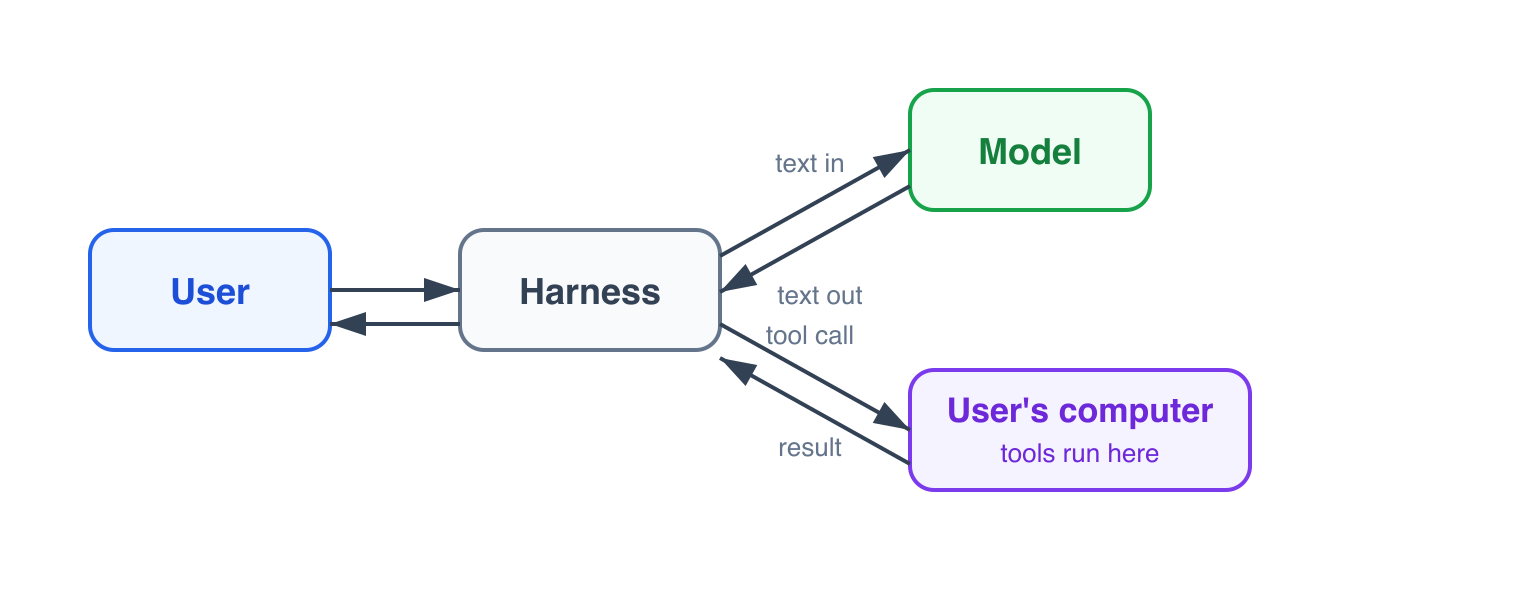
The models DO NOTHING. They just sit on a hard drive somewhere just like the giant CSV files they are. For the model to do something, an inference engine running on a server uses the numbers in the model to turn one string of vectors into another string of vectors - exactly like an Excel spreadsheet. The model only ever works with vectors (which is why it needs powerful graphics cards to run well) - it never even “sees” words or letters. The inference engine converts any text into those vectors before the model gets involved and then converts the output vectors back into text and sends the text on.
Then there’s another piece of software on the other end (nowadays called a “harness”) that looks for trigger patterns in the text and based on what they are, it either:
Displays the text to the user with formatting (e.g. <bold>), or
Sends them on to the user’s computer (this is the new and exciting bit) to run (e.g. <list file>, <make file with code> or <run file with code>). This part can run in a loop for a while before the user sees anything because the software can send the results of the commands back to the model for more commands to come back. That’s all an “agent” is.
C. Misconceptions about learning and training
7. The models are “trained” on the internet
NO. They are trained on a curated subset of the internet and other data sets and then post-trained on specialist curated or custom-made data. (Meaning any statement that ‘the model is unreliable because there’s unreliable data online’ is wrong.) Yes, models can make mistakes, but those are not due to errors in the training data.
8. The people who make the models must know what they can do and fix any errors
NO. These models were trained not “programmed”. They are not really software with algorithms inside them that make them do exactly what the programmers wanted. The training was designed with certain objectives and the data was more or less carefully curated (but within limits given the scale) but after that we can only hope that they will do something useful. Which is why the models are tested by their makers on certain benchmarks but nobody really knows how “good” they will be in practice until a lot of people start using them.
In this, they are not that different from people. We can try to educate a person as well as we can and test them as rigorously as we want to, but only time will tell how good they will actually be at their job.
9. The model can recite anything from its training data
NO. After a model was trained, the training data is no longer available to it. The model cannot accurately recite any text from the 10s of trillions of words worth of text in its training dataset. Models are often very good at reciting long passages from well known texts (like Shakespeare) but you should not rely on this. That’s why they often “make up” citations for non-existent books.
In this, the models are not that different from humans. We don’t remember all that we read or even all that we wrote. Ask an author of an article they just completed, to recite the second paragraph exactly. They will be able to tell you what’s in it but not reproduce it word for word. Authors don’t always even remember the titles of the articles or books they published.
10. The models can never learn about human emotions because they didn’t experience life
NO. This was an assumption people had about AI. But now, we empirically know that the models can produce text or images that accurately reflect human intentions and emotions without having to have had human experiences or bodies. Many people find them to be very good conversationalists who “get” their emotional needs better than their partners or therapists.
That does not necessarily mean they themselves have “emotions” in the way we think of them. You probably do need a body to have an emotion - but just like we can get into the emotional space of someone who had a very different experience from us - for example, by reading a novel or watching a movie — the models can get into the same emotional space as us without having any of our experiences (or, in fact, any experiences of any kind).
Weird and powerful
The models are powerful but also weird. Most of the time, it is much better to think of them as “human-like” than machine-like but it is always useful to keep the above in mind.
The weirdest part about the models is their lack of learning and memory. Talking to a model is like talking to a remote helpdesk where every time you ask a question, it is answered by a completely different person working only off the transcript and the notes of the person before. The models are much better than humans would be in a similar scenario up to the limit of their context window.
They are like an operator of a new machine who has to look up every step in the manual no matter how often they use it. Again, they can take in a much more complex manual than a human would in a similar situation, but unlike that human, they never get better at it. (Until the new machine’s manual is incorporated into the training data of a new model, which will then be able to use it.)
It takes a while to get a sense of what LLMs will be good or bad at, but it is possible to never get rid of some of these misconceptions because of the overall weirdness of the whole thing. So, hopefully, this can help some people.
Of course, they are not literally CSV files. The format is different but they are more like a CSV file than they are a computer program. ↩